
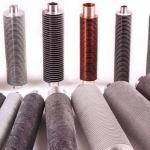

Heat transfer efficiency is a critical consideration in industrial equipment where temperature control, energy recovery, and process stability directly influence operating performance. Fin tubes are engineered to increase the effective surface area available for heat exchange, allowing thermal energy to move more efficiently between fluids and surrounding environments. As a specialized manufacturer and supplier, Timex Metals develops fin tube solutions for applications where thermal performance, dimensional accuracy, and dependable service are essential.
Why Fin Geometry Matters in Heat Transfer
A conventional tube provides a limited external surface for heat exchange. Adding fins significantly increases the available surface area without requiring a proportional increase in equipment size. This makes finned tubes particularly useful in heat exchangers, air coolers, boilers, condensers, radiators, and heat-recovery systems.
For procurement teams evaluating Fin Tube Manufacturers in India, the selection process should consider more than tube dimensions. Fin height, thickness, spacing, tube diameter, material compatibility, operating temperature, and installation conditions all influence the final performance of the heat-transfer assembly.
Matching Tube Design to Operating Conditions
Different industrial systems demand different fin configurations. Applications involving air-side heat transfer may require a larger external surface area, while compact equipment may prioritize a particular fin density or geometry. The tube and fin materials must also work effectively together under the expected thermal and environmental conditions.
An experienced Fin Tube Manufacturer can help buyers determine suitable configurations according to heat-transfer requirements, fluid characteristics, temperature ranges, pressure conditions, and equipment design.
Product Configurations for Diverse Requirements
Extruded Aluminium Fin Tubes
Where lightweight construction and efficient heat dissipation are important, Extruded Aluminium Fin Tubes provide a practical solution. Aluminium offers good thermal conductivity and can be formed into fin structures that create an expanded heat-transfer surface. These tubes can be considered for heat exchangers, cooling systems, refrigeration equipment, and other applications where weight and thermal efficiency are important design factors.
Helically Wound High Fin Tubes
For systems requiring an increased external heat-transfer area, Helically Wound High Fin Tubes provide a configuration in which fins are continuously wound around the tube. This arrangement increases surface exposure while maintaining a compact tubular structure, making the design suitable for various heat-exchanger and process-heating applications.
Fin Profiles and Their Functional Differences
Fin geometry can be adapted to suit different thermal and mechanical requirements. The profile selected can influence contact between the fin and tube, surface area, resistance to environmental exposure, and overall heat-transfer characteristics.
'G' Fin designs use a groove-based construction in which the fin is mechanically embedded into the tube. This provides a strong fin-to-tube connection and can be suitable for applications requiring reliable mechanical stability.
In 'L' Fin construction, the fin material is formed around the tube in an L-shaped configuration. This design can provide increased surface area while offering protection around portions of the tube surface.
For demanding environments where enhanced mechanical attachment and resistance to operating conditions are important, 'KL' Fin construction provides an engineered fin configuration designed to improve the bond between the fin and tube.
Where Fin Tubes Deliver Industrial Value
Fin tubes are widely associated with equipment where efficient heat exchange must be achieved within practical space limitations. They can be incorporated into air-cooled heat exchangers, boilers, economizers, condensers, heaters, coolers, waste-heat recovery systems, and process equipment.
Industries such as power generation, petrochemicals, oil and gas, chemical processing, HVAC, refrigeration, and general manufacturing can benefit from properly specified finned-tube systems.
When selecting a Fin Tube Supplier in Dubai & Fin Tube Supplier in India, buyers should review material compatibility, dimensional tolerances, fin attachment, surface condition, manufacturing consistency, and inspection requirements. These factors can influence both equipment efficiency and long-term service reliability.
Procurement Considerations for Long-Term Performance
A suitable fin tube should be selected according to the complete operating environment rather than a single specification. Temperature, pressure, fluid composition, airflow, corrosion exposure, thermal expansion, and maintenance conditions should all be evaluated before finalizing the product.
Working with a dependable Fin Tube Supplier can also simplify procurement by supporting customized dimensions, material requirements, project quantities, technical specifications, and quality documentation.
Final Perspective
Fin tubes combine intelligent surface-area engineering with application-specific material and profile selection. By increasing the available heat-transfer area while maintaining a practical tubular configuration, they help engineers design more efficient thermal systems. Careful consideration of tube material, fin geometry, attachment method, operating conditions, and equipment requirements enables buyers to select fin tube solutions aligned with their performance objectives.
For related industrial requirements, Stainless Steel Electropolish Pipe Fitting Manufacturers in India also support applications where surface quality, corrosion resistance, and hygienic performance are important considerations.