
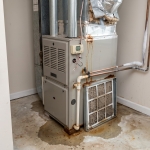

Most heating and cooling systems don't fail without warning. They drop hints for weeks or months first. A new rattle. A bedroom that never warms up. A utility bill that jumps for no clear reason. Catch those hints early, and HVAC Repair in Pleasantville is usually a quick, affordable visit. Ignore them, and you may be calling for help on the coldest night of the year.
Below are eight signs that your furnace, boiler, air conditioner, or heat pump needs attention, plus a few safe checks you can do yourself before you pick up the phone.
1. Your energy bills keep climbing
Utility rates change, and a cold January will always cost more than a mild one. But if your bills rise steadily while your habits stay the same, your system is probably working harder than it should. Common causes include a clogged filter, a failing blower motor, low refrigerant in an air conditioner or heat pump, or a boiler that needs cleaning and adjustment.
Compare this month's bill with the same month last year. A jump of 15% or more with similar weather is worth a look. Scheduling HVAC Repair in Pleasantville at this stage often fixes the underlying issue and brings the bills back down, which means the visit can partly pay for itself.
2. Some rooms are too hot or too cold
Uneven temperatures are one of the most common complaints we hear, especially in older Pleasantville homes. In a forced-air system, the cause may be a leaky or disconnected duct, a closed damper, or a blower that's losing strength. In a hot water or steam system, cold radiators often point to trapped air, a failing circulator pump, sediment in the lines, or a problem with a steam vent.
Some hot and cold spots come from the house itself, such as poor insulation or drafty windows. A technician can tell the difference. If a room that used to be comfortable suddenly isn't, that change is a strong sign you need HVAC Repair in Pleasantville rather than a space heater.
3. You hear new or unusual noises
Every system makes some sound. What matters is a change. Pay attention to these noises:
- Squealing or screeching: often a worn belt or a motor bearing that's failing
- Grinding: metal parts rubbing together, which can quickly damage a motor
- Banging or booming at startup: in a furnace, this can mean delayed ignition, where gas builds up before it lights
- Loud clanging in radiator pipes: usually water trapped in steam lines, a sign of pitch or venting issues
- Rapid clicking: an ignition or relay problem
- Rattling: a loose panel, a fan blade hitting something, or debris in the outdoor unit
A furnace that booms when it fires deserves prompt HVAC Repair in Pleasantville. Delayed ignition stresses the heat exchanger and can lead to cracks over time. Grinding noises also shouldn't wait, since running a damaged motor can turn a small parts replacement into a much larger job.
4. You notice strange smells
A faint dusty smell the first time you turn on the heat each fall is normal. It's just dust burning off the heat exchanger, and it should fade within an hour. Other smells are different:
- Burning plastic or electrical odors: an overheating motor or wiring problem. Turn the system off and call for service.
- Musty or moldy smells: moisture in the ductwork, a clogged condensate drain, or mold growth on an air conditioner coil.
- Rotten egg or sulfur smell: this can mean a natural gas leak. Leave the house right away, don't flip switches, and call your gas utility or 911 from outside.
Musty odors are easy to dismiss, but they affect the air your family breathes every day. Booking HVAC Repair in Pleasantville to find the moisture source can protect both your equipment and your indoor air quality.
5. The system turns on and off too often
A healthy system runs in steady cycles. If yours starts, runs for a few minutes, shuts off, and starts again, it's short cycling. This wears out parts fast and wastes energy.
Short cycling can come from a dirty flame sensor, an overheating furnace caused by restricted airflow, a thermostat in a bad location, low refrigerant, or a system that's simply too big for the house. Some of these are simple fixes. Others need a closer look at sizing and ductwork. Either way, short cycling is a clear signal to schedule HVAC Repair in Pleasantville before the extra wear leads to a failed component.
6. Airflow from the vents feels weak
Put your hand near a supply vent. If the air barely moves, or if some vents blow much harder than others, something is restricting the flow. The simplest cause is a filter packed with dust. Beyond that, possible culprits include a failing blower motor, blocked or crushed ducts, a frozen air conditioner coil, or a duct that has come loose in the attic or basement.
Weak airflow makes the whole system run longer to reach the set temperature. If a fresh filter doesn't solve the problem, it's time for HVAC Repair in Pleasantville to find out what's blocking the air.
7. You see water, ice, or leaks
Water around your equipment is never a good sign. Air conditioners and high-efficiency furnaces produce condensation, and it should drain away through a line or pump. When that line clogs, water backs up into the drain pan and onto the floor. Boilers can leak at fittings, valves, or the pump, and a pressure relief valve that drips may point to pressure building too high inside the system.
Ice is another warning. Frost on the refrigerant lines or the indoor coil of an air conditioner usually means low refrigerant or poor airflow. Don't chip at it. Turn the cooling off, let it thaw, and call for HVAC Repair in Pleasantville. Running a frozen system can damage the compressor, which is one of the most expensive parts to replace.
8. Your home feels humid, dusty, or stuffy
Your HVAC system does more than change the temperature. It also moves, filters, and dries the air. If your house feels sticky in summer even with the AC running, the system may be oversized, low on refrigerant, or running the fan in a way that puts moisture back into the air. If dust settles on furniture soon after cleaning, or allergy symptoms get worse indoors, the filter, ducts, or air cleaning equipment may need attention.
Indoor air problems tend to build slowly, so homeowners often get used to them. A technician performing HVAC Repair in Pleasantville can check humidity levels, duct leakage, and filtration, then recommend options such as better filters or a UV air purifier if your home would benefit.
Safe checks to try before you call
Some problems have simple answers. Before booking HVAC Repair in Pleasantville, take a few minutes to rule out the basics:
- Check that the thermostat is set to the right mode (heat or cool) and the right temperature, and replace its batteries if it uses them.
- Replace or clean the air filter. A clogged filter causes a long list of symptoms on its own.
- Make sure the breaker for the furnace, air handler, or outdoor unit hasn't tripped, and that the service switch near the furnace is on.
- Open supply vents and return grilles, and move furniture or rugs that block them.
- Clear leaves, snow, or debris from around the outdoor unit.
- For a boiler, check the pressure gauge. Most residential hot water systems run between about 12 and 25 psi. A reading well outside that range calls for a technician.
If a breaker trips again after you reset it, stop there. Repeated tripping points to an electrical fault, and resetting it over and over can cause damage. Never open sealed panels, adjust gas valves, or bleed a boiler if you're unsure how. Those jobs belong to a licensed professional.
Repair or replace?
Not every warning sign means you need a new system. Most of the issues above can be repaired. Still, age matters. Furnaces and boilers often last 15 to 20 years or more with good care, and central air conditioners and heat pumps typically last 12 to 15 years. If your equipment is near the end of that range, needs frequent repairs, or faces a major failure like a cracked heat exchanger or a dead compressor, replacement may make more financial sense.
A good technician will lay out the options honestly. When you schedule HVAC Repair in Pleasantville, ask for the repair cost, the age and condition of the system, and what a replacement would cost by comparison. With those numbers, you can make the call that fits your home and your budget.
How maintenance prevents most of these problems
Many of the warning signs above trace back to issues a routine tune-up would catch: dirty burners, worn belts, low refrigerant, clogged drains, and loose electrical connections. We recommend two visits a year, one in spring for cooling and one in fall for heating. Regular maintenance won't eliminate the need for HVAC Repair in Pleasantville, but it makes surprise breakdowns far less likely and helps your equipment reach its full lifespan.
Schedule HVAC Repair in Pleasantville with A. Borrelli Mechanical
When your system starts sending warning signs, you want a team that knows Pleasantville homes and answers the phone. A. Borrelli Mechanical has served this community since 1981 from our shop on Wheeler Avenue. Our NATE-certified, licensed, and insured technicians repair furnaces, boilers, air conditioners, heat pumps, and UV air purifiers, including the older steam and hot water systems found in many of the village's historic houses.
We diagnose the problem, explain your options in plain language, and give you upfront pricing before any work begins. And if your heat fails on a winter night or your AC quits during a heat wave, our emergency team is available 24/7.
Don't wait for a small issue to turn into a breakdown. Visit the website of A. Borrelli Mechanical to request service online to schedule HVAC Repair in Pleasantville with a family-owned team that treats your home like a neighbor's.